
In 2026, smart offices go beyond gadgets — they enable hybrid work, seamless employee experiences and sustainable operations. A smart-office setup removes friction, supports flexibility and fosters a positive environment that drives productivity.
Many elements make a smart office and many technologies can be integrated within the modern workspace. However, there are three main objectives that a smart office must achieve to match today’s needs.
What makes an office “smart”?
1. Increased productivity
The main element of a smart workspace is the technologies implemented to help remove any obstacles or redundant tasks. They save time so employees can concentrate on tasks that matter, improve collaboration between team members, and make better use of the existing office space.
Not having to think about booking meeting rooms; not spending time wondering where you’re going to store your laptop over lunch; not having to think about where you are going to sit in the office before coming into work are all examples that remove friction and save time.
2. Health and wellbeing
Increased productivity isn’t the only important role that a smart office needs to fulfil. Recently there’s been more discussion about wellbeing at the workplace. It’s not only about having a healthy work and life balance. When at work, employees should feel like their workplace is treating them fairly.
One of the key expectations of the office is to be up to modern standards, including different work models, i.e. hybrid working or ABW.
It’s also essential to track the physical health of the employees with technologies such as CO2 levels sensors.
3. Sustainability
Smart office buildings aim to be as environmentally friendly as possible, and various technologies help achieve that crucial goal.
Today it’s essential for buildings to have carefully chosen building materials, to be energy efficient, track their water consumption levels, reduce waste, recycle, etc.
A sustainable workplace is a more desirable workplace because preserving the environment is one of today’s most important topics.
People desire to work in spaces designed to boost their productivity, remove obstacles, and create a healthy and sustainable environment where employee wellbeing is one of the top priorities. As the evolution of the smart office continues, innovative office technologies achieve these critical objectives and save time and budget for businesses.
FAQ's
What is a smart locker?
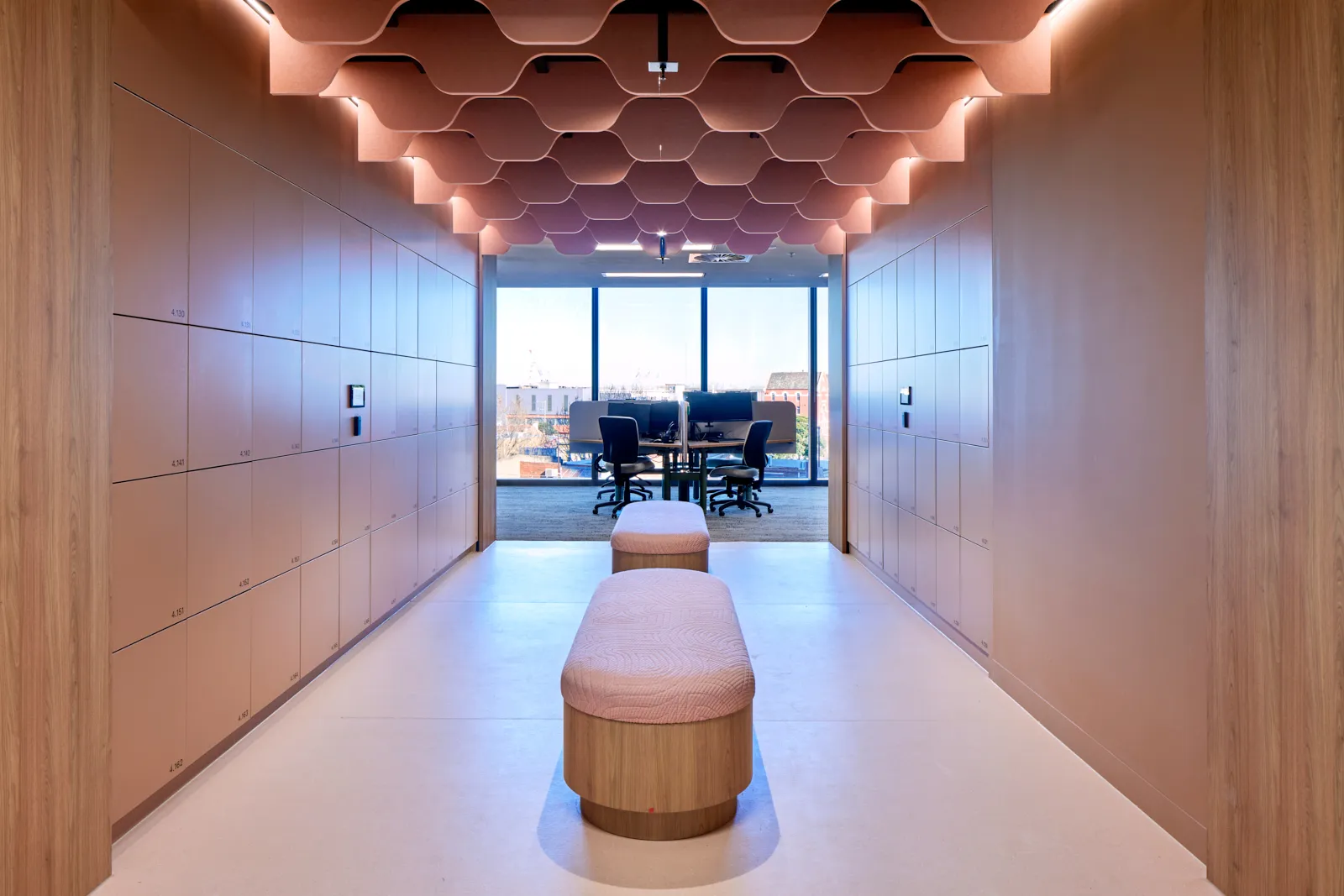
A storage locker fitted with an electronic, keyless lock instead of a key or padlock. It is a digitally managed storage solution, opened through mobile, RFID or PIN methods and managed centrally through a dashboard.
Where are smart lockers used?
Across offices, schools and universities, gyms and leisure centres, end-of-trip facilities, and public spaces like libraries and aquatic centres. In short, anywhere there are more potential users than locker spaces, or a need to cut manual locker admin.
Do smart lockers reduce how many lockers you need?
Yes. Not everyone actually needs a locker: based on Yellowbox's data, only around 60 to 70 per cent of people do. Letting staff book their own, and tracking which lockers fall idle, shows who genuinely needs one, so you can provide fewer and save up to around 30 per cent on lockers and floor space.
Are smart lockers good for sustainability?
A smart locker reduces the number of lockers and floor space needed, lowering material and energy use and potentially contributing to green building ratings. Retrofitting smart locks onto existing lockers, rather than replacing them, adds to the benefit.
Planning your workplace locker strategy?
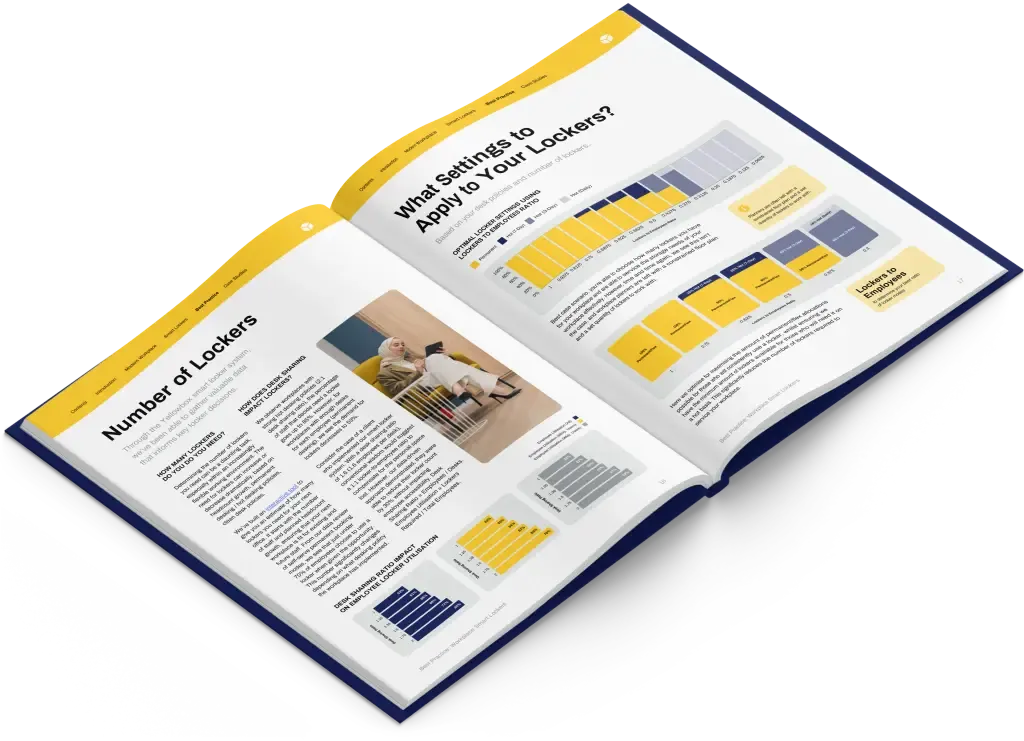
Get the best-practice guide to planning, implementing and managing workplace lockers, with insights from hundreds of workplaces.