
A practical guide to smart end-of-trip and changing-room lockers for building owners, facilities managers and workplace teams.
What are end-of-trip lockers?
End-of-trip lockers are the secure lockers provided in a building’s end-of-trip facilities — the changing rooms, showers and bike-storage areas used by people who cycle, commute or exercise. In commercial property they sit at the heart of “end-of-trip facilities”; in gyms and leisure centres these are often called changing-room, gym or shower lockers. Either way the job is the same: somewhere secure to leave your clothes and belongings while you get on with your day.
What has changed is how they are managed. Traditional changing-room lockers rely on a physical key, a padlock or a fixed combination. Modern end-of-trip lockers are smart: each door has an electronic, keyless lock, and the whole bank is run from software.
Where are end-of-trip lockers used?
End-of-trip lockers are most common in commercial office buildings, where they are a core amenity for tenants who commute or exercise as part of their workday. You will also find them across:
- Amenity and wellness floors in premium buildings.
- Gyms and leisure centres.
The common thread is shared, high-turnover use: many people need a locker, but not all at the same time, and usually only for a day or a week at a time.
How do end-of-trip lockers work?
Most smart end-of-trip lockers run as hot lockers - shared lockers claimed on a day-use or week-use basis. A person takes a free locker when they arrive, uses it for the day or the week, and the system releases it back into the pool automatically when the booking ends.
Hot lockers don’t necessarily mean you lose permanent storage where you want it. With a smart locker, the same system can also run permanent lockers, either assigned to a specific person, or by certain user groups, alongside the shared pool.
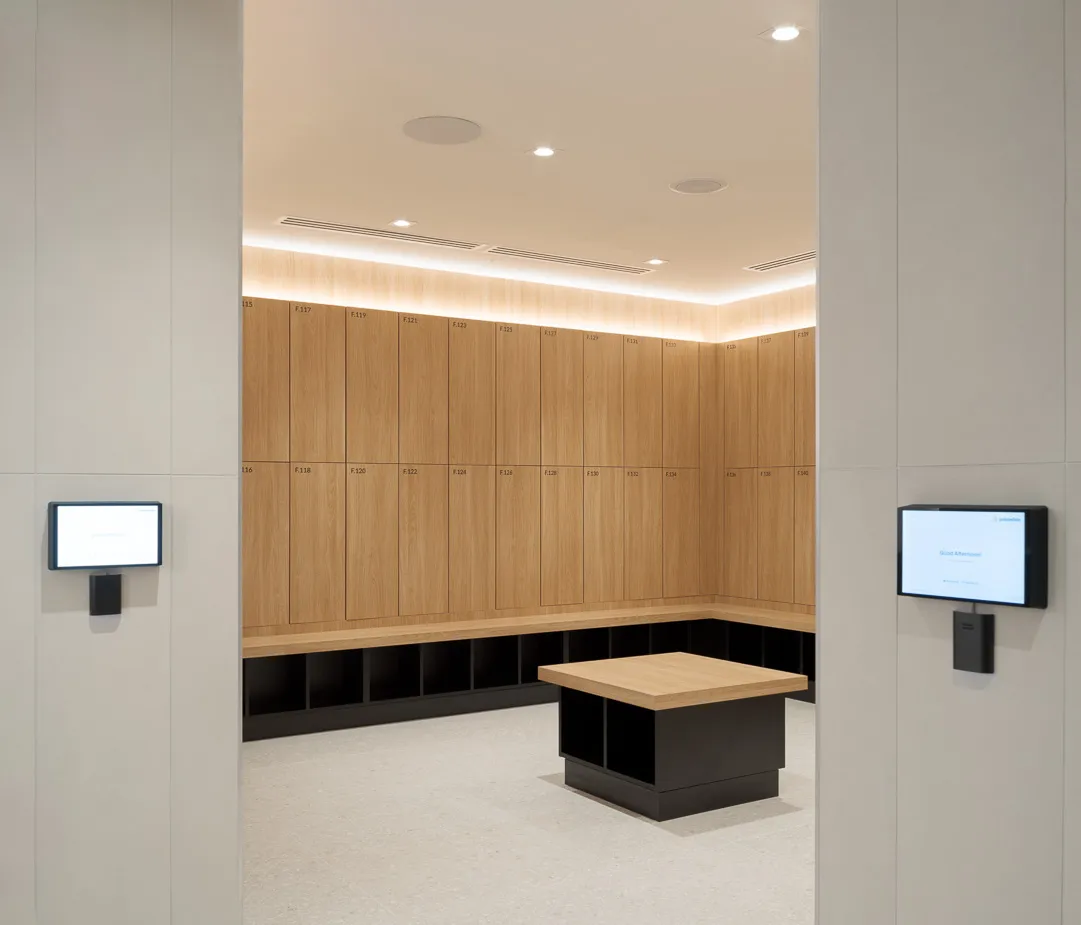
For end-of-trip, people should be able to open their locker with the building access credential they already carry, typically their building access card, backed up by a PIN on the kiosk or door. Some buildings also offer access through their own building app. A touchscreen kiosk at the locker bank guides users to a free locker.
Managing the lockers is handled centrally in software, with facilities teams able to see real-time availability and usage from their desk. Bookings typically run on a set schedule, for example, weekly hot-locker bookings that end at 9pm on a Friday. After that, advanced systems offer features like cleaner mode so cleaners can open every locker that’s been used that week, ready to clear and clean.
Why do traditional changing-room lockers fall short?
The frustrations of traditional changing-room and end-of-trip lockers aren’t new: lost keys, hoarded lockers and constant admin for facilities teams. People only put up with the hassle because there wasn’t a better option. In a busy facility, the old frustrations show up as:
- Hoarding and empty space: Without active management, a minority of users hold lockers permanently while everyone else finds the bank “full”, even when most of the lockers are empty.
- Lost keys and padlocks: Keys go missing and padlocks get forgotten, leaving staff to cut locks and re-issue keys, and users locked out.
- No visibility: Nobody can see which lockers are actually in-use, making it difficult to monitor usage or find available lockers.
- Slow turnover: A locker held by someone who left hours ago is a locker the next commuter can’t use.
- Manual admin: Re-keying and locker-assignment spreadsheets eat hours of facilities time every week.
A strong smart locker solution essentially removes all these frustrations.
Smart vs traditional end-of-trip lockers
| Feature | Traditional changing-room lockers | Smart end-of-trip lockers |
|---|---|---|
| Access | Physical key, padlock or fixed combination | Building access card, phone or kiosk PIN (building app where offered) |
| Allocation | Permanent or first-come — often hoarded | Day or week use, shared pool, auto-released on schedule, plus permanent lockers where needed |
| Finding a free locker | Trial and error | App or kiosk |
| Lost “key” | Locksmith or bolt cutters | Access can be revoked and reissued instantly |
| Visibility | None | Real-time availability and usage data |
| Management | Manual and on-site | Remote dashboard with full audit trail |
| Capacity | One locker per person | Fewer lockers serve far more people |
| Reconfiguration | Requires rebuild | Locker behaviour and rules can be changed remotely |
| Integrations | Standalone furniture item | Works with building access and identity systems |
What should you look for? How to choose end-of-trip lockers
When comparing end-of-trip or changing-room locker systems, work through this checklist:
- Day, week and permanent modes: End-of-trip facilities usually run day or week-use hot lockers. Ideally on a system that can also run permanent lockers on the same hardware for certain use cases.
- Keyless access that reuses existing credentials: For end-of-trip, the best systems open with the building access card or phone people already carry, plus a backup PIN on the kiosk. Some buildings also add access through their own building app.
- Availability: How easily can users find a free locker? Look for an app or a kiosk that shows what’s free at a glance.
- Turnover: How are lockers returned to the pool? A good system ends bookings on a set schedule (for example, Friday at 9pm) and gives cleaners a one-tap Cleaner Mode.
- Durability and hygiene: Showers and changing rooms are wet environments; hardware and finishes need to suit them and be easy to clean.
- Keyless management and audit: Remote allocation, scheduled release of bookings, Cleaner Mode and a full audit trail of who accessed which locker and when.
- Security and data: Encryption, recognised certifications such as ISO 27001, instant revocation if a credential is lost, and a clear position on where data is stored.
- Integrations: The system should plug into the access-control and identity systems the building already uses, so onboarding and offboarding can be automated.
How many end-of-trip lockers do you need?
Because hot lockers are shared and released on schedule, a building no longer needs one locker per person. A smaller, centrally managed bank serves far more people than a traditional locker bank.
Run as hot lockers, a smart-locker model can need 50% or more fewer lockers than a traditional one-per-person bank, freeing that floor space for other uses.
The right number depends on how many people use the facility, when they arrive, and how long they hold a locker, which is exactly why tracking and usage data matters.
How end-of-trip lockers play into sustainability and building ratings
In many commercial developments, end-of-trip facilities are tied to green-building ratings and planning requirements — schemes such as Green Star, NABERS and WELL, and council planning controls that set minimum numbers of bike spaces, showers and lockers.
Smart hot lockers help here in two ways: they let a building meet locker provision with fewer physical lockers (therefore less materials) and less floor space, and the usage data makes it straightforward to demonstrate the facility is genuinely used.
How much do end-of-trip lockers cost?
There is no single price because cost depends on the project. The main factors:
- Number of lockers
- Lock type (wired locks are slightly lower cost compared to wireless, although they require kiosk hardware)
- Number of kiosks at each locker bank
- The joinery itself (the physical cabinetry, usually quoted separately by a joinery supplier along with installation)
- Software subscription (an ongoing per-locker fee that covers the platform, updates and support)
One principle is worth knowing: because shared models need fewer lockers than one-per-person, the right system can lower the total spend even before you count the time savings, so it makes sense to weigh the total cost of ownership over several years rather than the day-one hardware price alone.
What if the power, internet or battery fails?
- A short network drop: If the connection to the building network drops, on a strong system users should still be able to open the locker they’re already using. Ask the vendor to be specific about what does and doesn’t keep working offline.
- A low or flat lock battery: On wireless locks, a good system tracks each lock’s battery level and warns facilities so batteries are replaced in good time. The strongest systems go a step further and automatically take a lock with a low battery out of the available pool.
- A lost or failed credential: If someone loses their card or phone, they shouldn’t be stranded. Look for a second way in, such as a PIN or a kiosk, and the ability for staff to instantly revoke the lost credential and grant access through the dashboard.
- Someone genuinely stuck, or belongings left behind: Facilities teams should be able to open any locker remotely from the dashboard to help a user who’s locked out.
Published by Yellowbox
This guide was published by Yellowbox, a global provider of smart locker systems for workplaces and commercial buildings, including end-of-trip and changing-room facilities. Yellowbox smart lockers run day-use, week-use, shared and permanent modes on one platform, open with the credentials people already carry, and can be retrofitted onto existing lockers.
See how Yellowbox delivered smart end-of-trip lockers for London’s iconic ‘Cheesegrater’ building (The Leadenhall Building), in our case study here.
To see how smart end-of-trip lockers would work in your building, book a demo with the Yellowbox team.
FAQs
What is the difference between end-of-trip lockers and changing-room lockers?
They are usually the same hardware used in different settings. “End-of-trip lockers” is the commercial-property term for the lockers in a building’s changing, shower and bike-storage facilities. Changing-room lockers is the more general term often used in gyms, leisure centres and schools.
Are end-of-trip lockers day-use or assigned permanent lockers?
Most are hot lockers, set to be day or week-use. A person claims a free locker on arrival and the system releases it back to the pool on a set schedule. Good platforms can also run permanent lockers on the same hardware.
How do people open a smart end-of-trip locker?
Usually with the building access card they already carry, plus a backup PIN on the kiosk. Some buildings also offer access through their building app.
Can smart locks be retrofitted onto existing changing-room lockers?
Often yes. Wireless and sometimes wired smart locks can be retrofitted onto existing locker furniture so a facility can be upgraded without replacing the joinery.
How secure are end-of-trip lockers?
A well-built system uses encryption, recognised security certifications such as ISO 27001, and a full audit log of who accessed which locker and when. If a card is lost, access can be revoked instantly, unlike a physical key which has to be replaced.
How many end-of-trip lockers does a building need?
Fewer than one per person when using smart lockers. Because hot lockers are shared and released on schedule, a smart bank serves up to 50% more people.
Planning your workplace locker strategy?
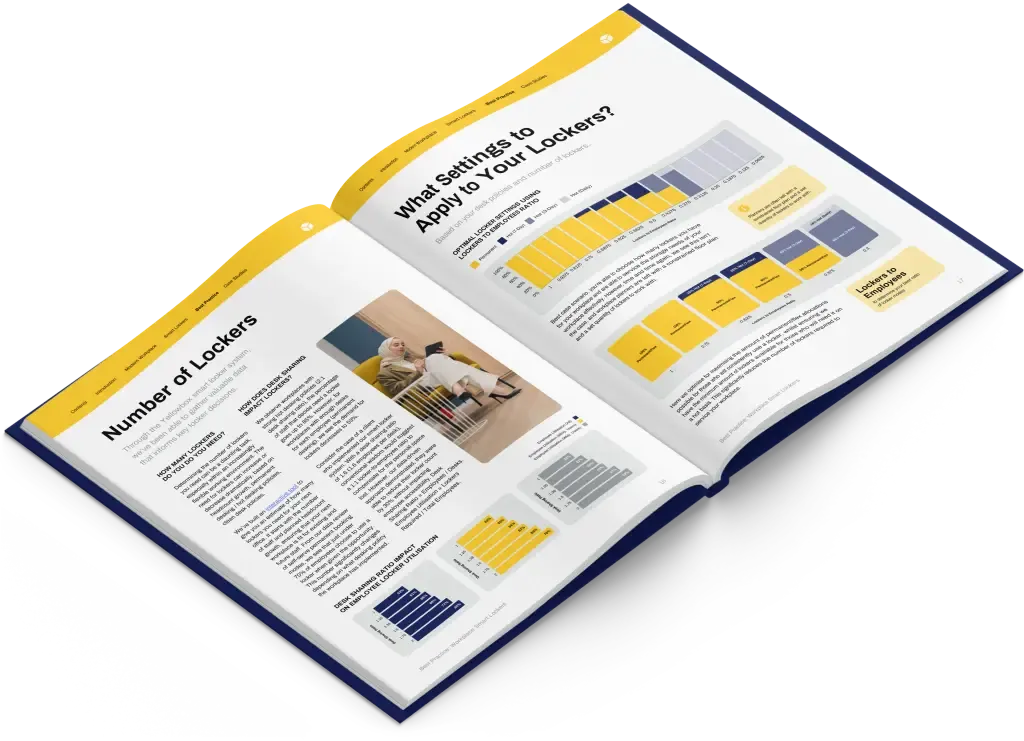
Get the best-practice guide to planning, implementing and managing workplace lockers, with insights from hundreds of workplaces.