
Typically when we think of lockers, we imagine a user having access to a locker, through a key, code, card or app, in perpetuity or for a prolonged period of time. But in reality, this is incredibly inefficient and is typically not the case, as that would require each employee, student, or gym-goer to have their own dedicated locker, thus requiring a significant amount of space.
Day-use lockers are a practical solution that saves space and budget.
What are day-use lockers?
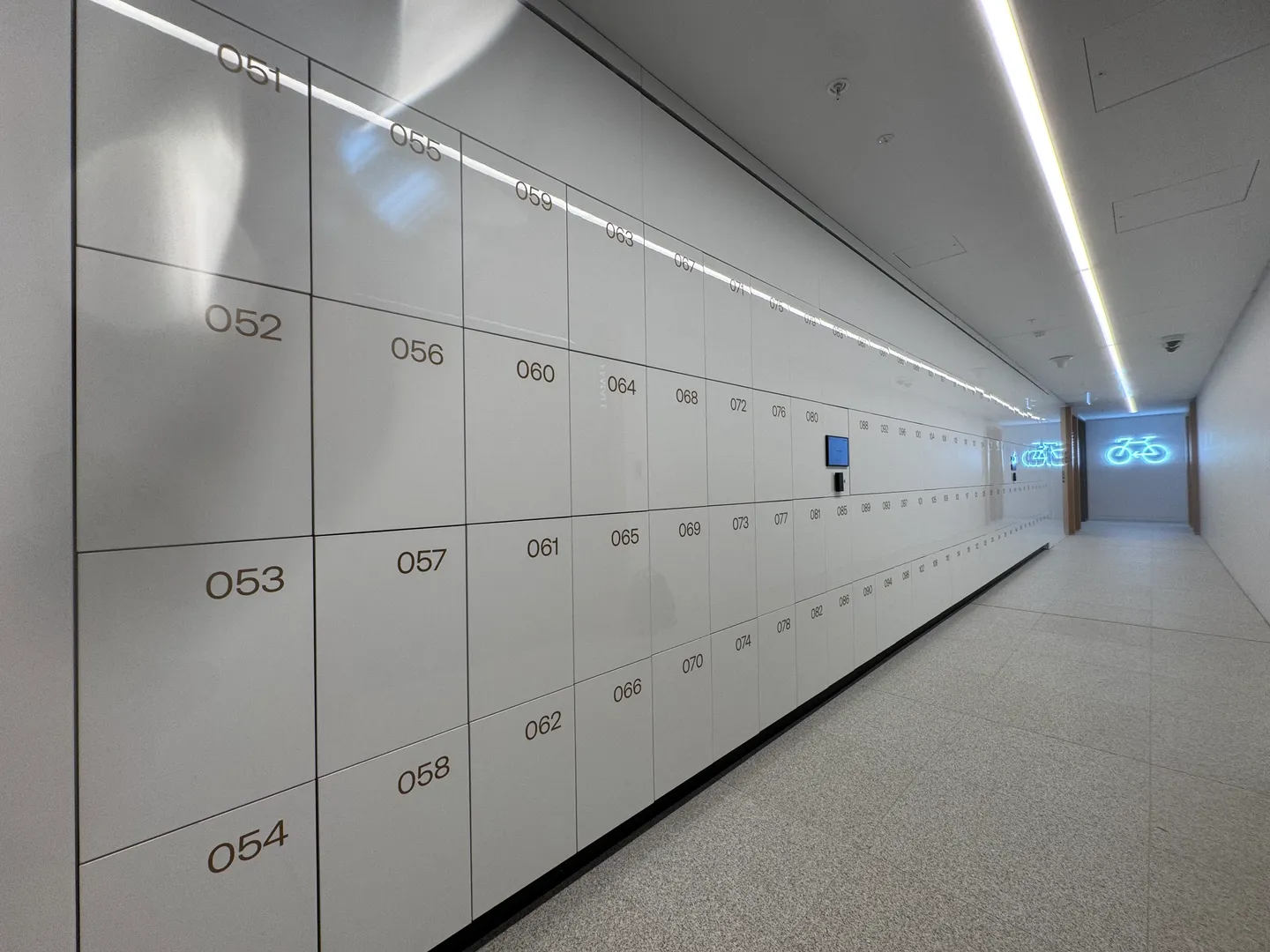
Day-use lockers are smart locker systems that allow users to secure a storage locker for the day (or a temporary amount of time), typically used by offices, schools, universities and public spaces with more potential users than available locker space.
Why are day-use lockers important?
Day-use lockers optimize for who is present and needs a locker on the day by automating allocation and authentication of users. This is critical for public locations such as gyms, aquatic centres, libraries, and universities, where the number of potential users outnumbers the availability of space for lockers by multiples.
Similarly, workplacesare trending towards the need for day-use lockers. Pre-COVID workplaces saw just under 70% of lockers used on an average workday. Since then, flexible working has reduced this number further with less employees in the office five days a week.
How are day-use lockers utilised in practice?
Typically day-use lockers are used as a ‘home base’ for the day whilst performing activities. Employees within workplaces with activity-based working (unassigned seating), use day-use lockers to store a gym bag or work bag throughout the day, only carrying around the essentials. For universities, students store their bag, books and laptop whilst moving between classes.
Even though they’re called “day-use”, these types of lockers can be used for any temporary amount of time (e.g. a few hours) and, depending on the location, can also be reserved for overnight use.
For example, here’s how Ashwin, a Structural Engineer at Arcadis, uses Yellowbox day-use lockers:
“I usually use Yellowbox at the end of the day to keep my work laptop at the office overnight. This way I come in the next morning knowing that it’s safe. I can also leave it behind if I’m going for a meeting at a client’s office.”
The need for flexibility and space efficiency has led to day-use lockers increasingly becoming the standard for lockers in various locations, especially today’s workplace, school, or gym. Find out how much smart day-use lockers can save you on space, lockers and ongoing administration.
For more information on features, click here.
FAQ's
What is a day-use locker?
A smart locker a user secures for the day or a temporary period, rather than keeping permanently. They suit offices, schools, universities and public spaces with more potential users than locker spaces, with the system automatically allocating a free locker to whoever needs one that day.
What is the difference between assigned, self-managed and day-use (hot) lockers?
Assigned lockers are kept permanently by one person. They suit full-time staff or specialist teams. Self-managed lockers are the most common in practice: people self-book a locker and keep it until they no longer need it, with no hard time limit, giving the right people a permanent spot without the admin. Day-use (hot) lockers are claimed when needed and released back to the pool, suiting hybrid staff. A good platform runs all three on the same hardware.
Do smart lockers reduce how many lockers you need?
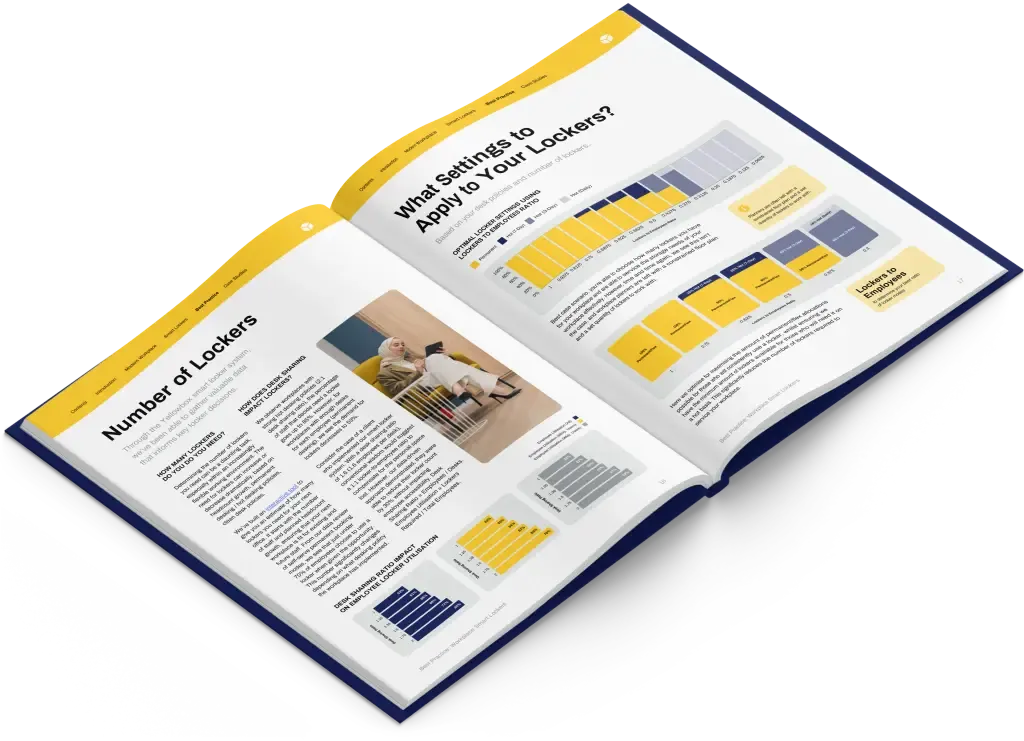
Yes. Not everyone actually needs a locker: based on Yellowbox's data, only around 60 to 70 per cent of people do. Letting staff book their own, and tracking which lockers fall idle, shows who genuinely needs one, so you can provide fewer and save up to around 30 per cent on lockers and floor space.
Where are smart lockers used?
Across offices, schools and universities, gyms and leisure centres, end-of-trip facilities, and public spaces like libraries and aquatic centres. In short, anywhere there are more potential users than locker spaces, or a need to cut manual locker admin.
Planning your workplace locker strategy?
Get the best-practice guide to planning, implementing and managing workplace lockers, with insights from hundreds of workplaces.