
In 2026, UK workplaces continue evolving toward hybrid and sustainable designs. Smart lockers have become a core element of that shift — enabling flexible desk sharing, secure personal storage, and valuable usage analytics that help facilities teams optimise space and reduce environmental footprint.
What is a Smart Locker?
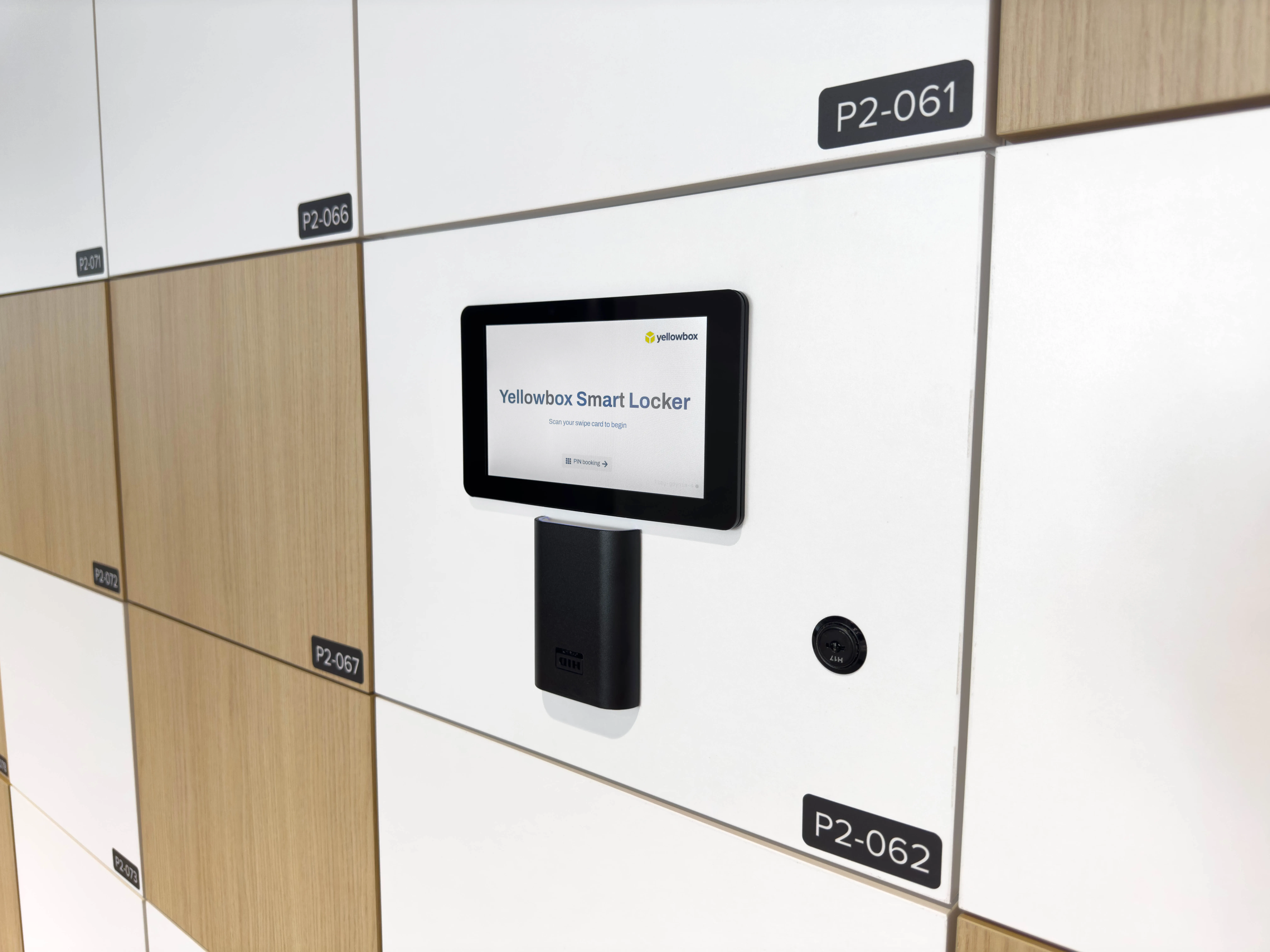
Smart Lockers are equipped with electronic locks (wireless or hardwired) on each door, connected to IoT hardware (such as a touchscreen kiosk) and software (including a user app and a management dashboard). Known also as digital lockers, intelligent lockers, automated lockers, electronic lockers, and IoT lockers, they primarily provide employees with a streamlined method to access their storage, significantly reducing the costs associated with manual locker management.
For those looking for a contextual analysis, this Smart Locker Comparison and Evolution article does a good job looking at smart lockers and how they have evolved over time.
How Do Smart Lockers Work?
Individuals can access smart lockers using various methods, including RFID cards, locker apps, workplace apps (like Microsoft Teams), and PIN codes. These methods authenticate the user’s identity and direct them to their assigned locker. The management of these lockers is simplified through a dashboard or management app, allowing for adjustments in settings, assignment of lockers, monitoring of usage patterns, remote access to lockers, and analysis of their utilisation.
You can visualise the key elements of smart lockers through seeing the access methods and management software in action.
How are Smart Lockers Integrated with Existing Systems?
Smart lockers can seamlessly integrate with employee databases (e.g., Microsoft Active Directory, Okta AD), security systems (e.g., HID security access cards), and workplace applications, creating a cohesive experience for users and administrators, and saving considerable time in onboarding processes.
How do Smart Lockers Compare to Traditional Lockers?
Smart lockers enhance the traditional locker experience by providing remote access, improved security, and greater convenience through digital interfaces like apps or PIN codes. They modernise management with real-time monitoring and customisable controls, moving beyond the manual, key-dependent operations of conventional lockers to meet modern storage needs efficiently and securely.
They also allow workplaces to reduce their environmental footprint, reducing the number of lockers required to provide storage for all employees. Read more about how smart locks and traditional locks compare.
What Should I Consider When Purchasing a Smart Locker System?
Consider the following:
- The desired access methods for users to book and access lockers.
- The locker allocation rules, such as a 70% permanent allocation and 30% for hot locker usage.
- The type of lock required, such as wireless or wired.
- The intended use case, like storage, parcel delivery, or IT exchanges.
Yellowbox can provide a free audit and provide best practice recommendations around how your smart lockers should be used for your use case.
What Are the Common Use Cases for Smart Lockers in the UK?
In the UK, smart lockers are frequently used for office and workplace storage, as they provide significant benefits over traditional lockers.
How Can I Purchase Smart Lockers?
Specialised providers such as Ahrend’s TechWall supply smart lockers, offering a range of options suited to diverse needs.
For architects and interior designers, smart lockers can be specified by selecting a locker and a smart locker lock, e.g. Yellowbox Wired Lock.
FAQ's
What is a smart locker?
A storage locker fitted with an electronic, keyless lock instead of a key or padlock. It is a digitally managed storage solution, opened through mobile, RFID or PIN methods and managed centrally through a dashboard.
How do you open a smart locker?
Ideally with a credential people already have: a building access card or RFID fob, a mobile app, a digital wallet pass (Apple or Google Wallet), a PIN, or a touchscreen kiosk. Some systems also allow access from workplace apps like Microsoft Teams or Outlook.
Can a smart locker system integrate with our access control?
The better systems integrate directly with common access control and identity platforms, and with a company active directory, so staff use one credential and provisioning happens automatically when people join or leave.
Do smart lockers reduce how many lockers you need?
Yes. Not everyone actually needs a locker: based on Yellowbox's data, only around 60 to 70 per cent of people do. Letting staff book their own, and tracking which lockers fall idle, shows who genuinely needs one, so you can provide fewer and save up to around 30 per cent on lockers and floor space.
How much do smart lockers cost?
It depends on the number of lockers, kiosks, the joinery, integrations, and the software subscription. Traditional locks are cheaper upfront, but their manual administration costs large organisations a great deal each year, and because shared smart-locker models also need fewer lockers, the right system can reduce total spend while saving admin time.
Planning your workplace locker strategy?
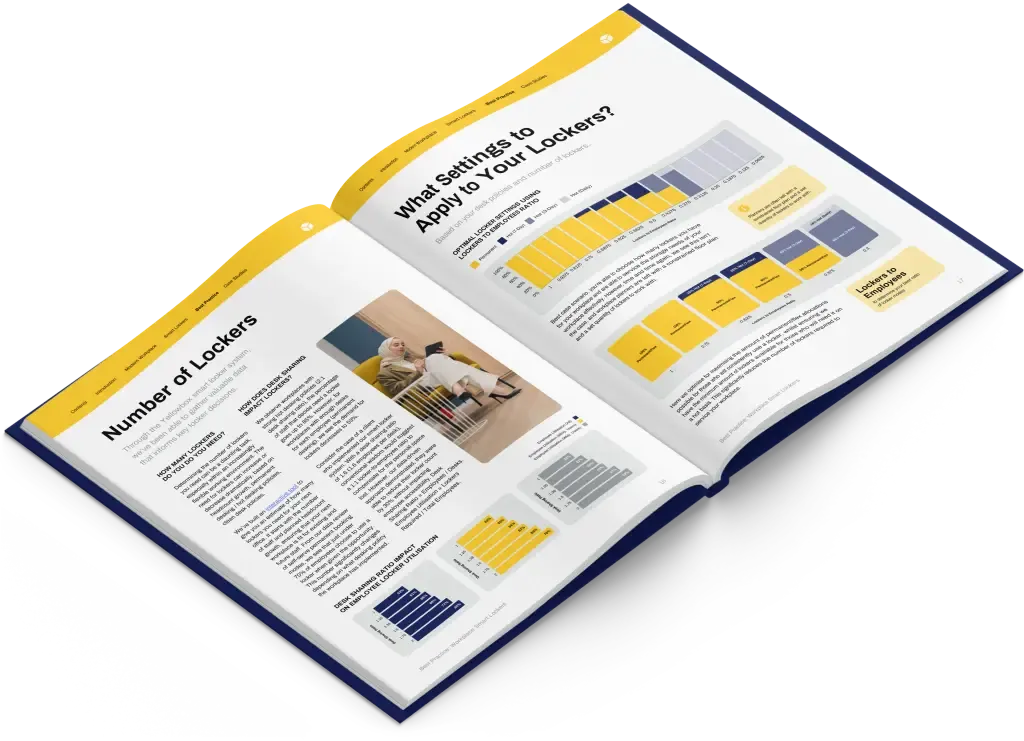
Get the best-practice guide to planning, implementing and managing workplace lockers, with insights from hundreds of workplaces.